Shea Butter vs. Synthetic Moisturizers: Which Is Better for Long-Term Skin Health?
Quick Answer
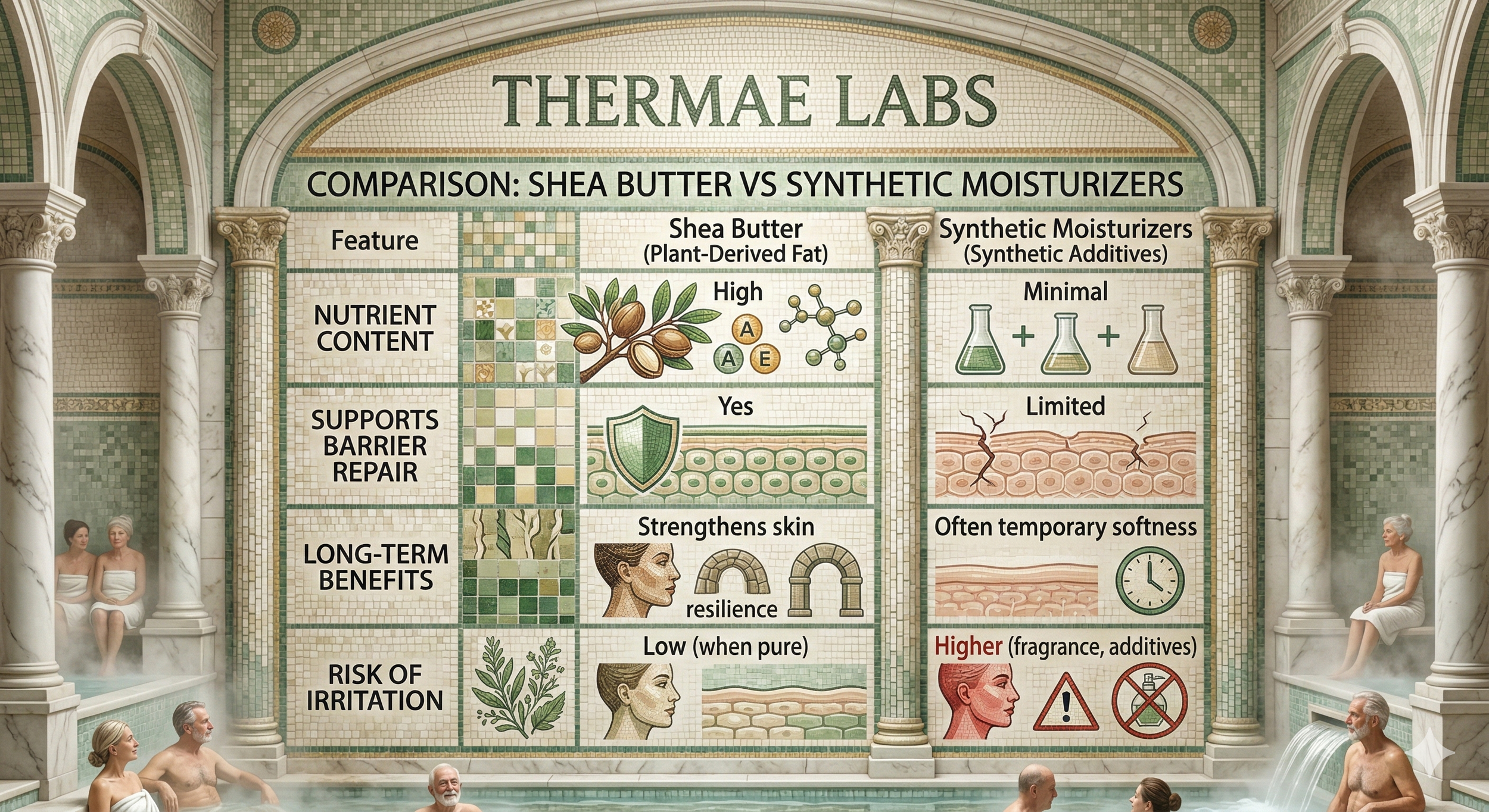
Shea butter supports skin barrier repair by delivering essential fatty acids and vitamins, while many synthetic moisturizers rely on petroleum-based occlusives that temporarily soften skin without restoring lipid balance.
What Is Shea Butter?
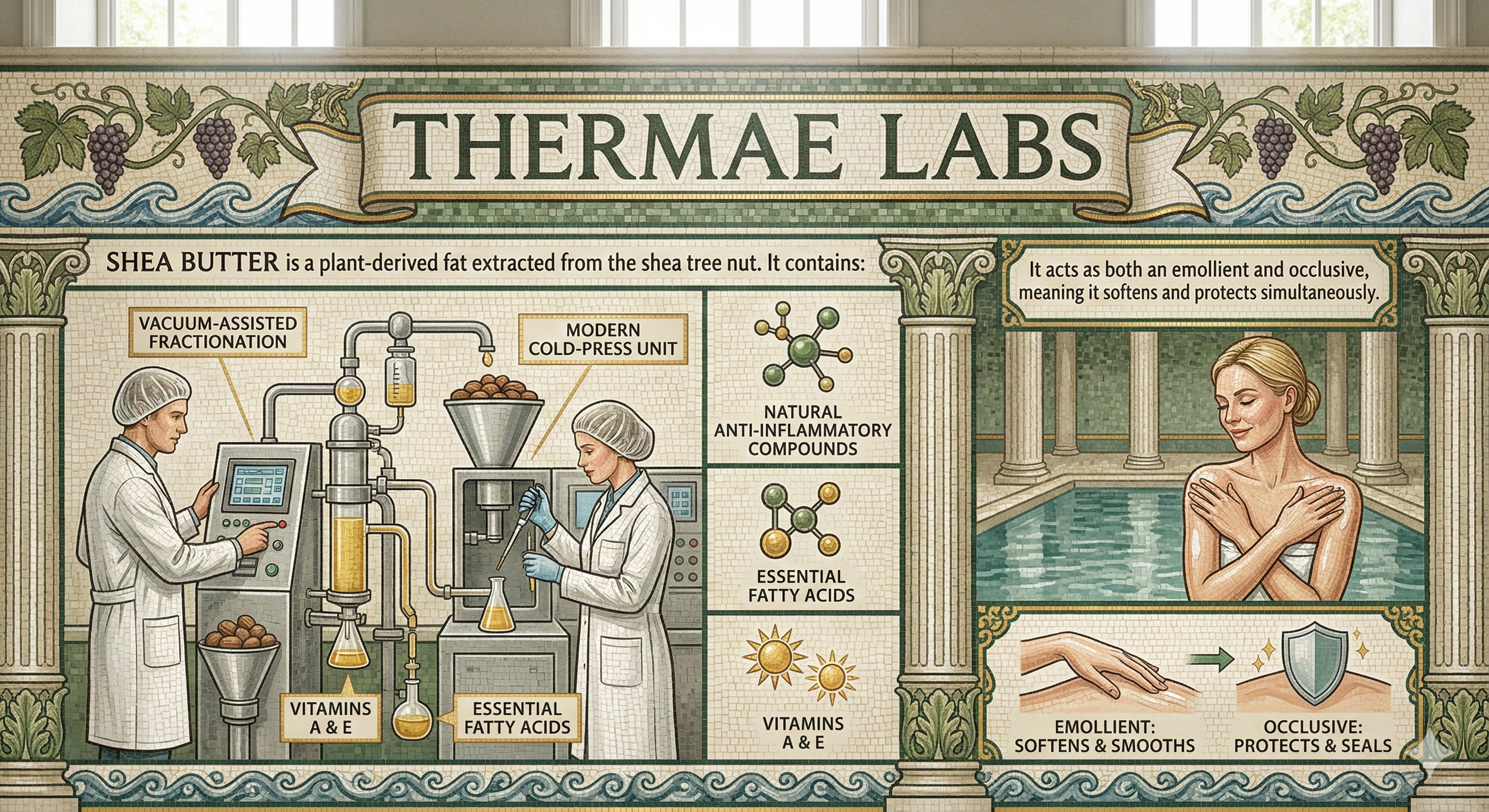
Shea butter is a plant-derived fat extracted from the shea tree nut. It contains:
Vitamins A and E
Essential fatty acids
Natural anti-inflammatory compounds
It acts as both an emollient and occlusive, meaning it softens and protects simultaneously.
What Are Synthetic Moisturizers?
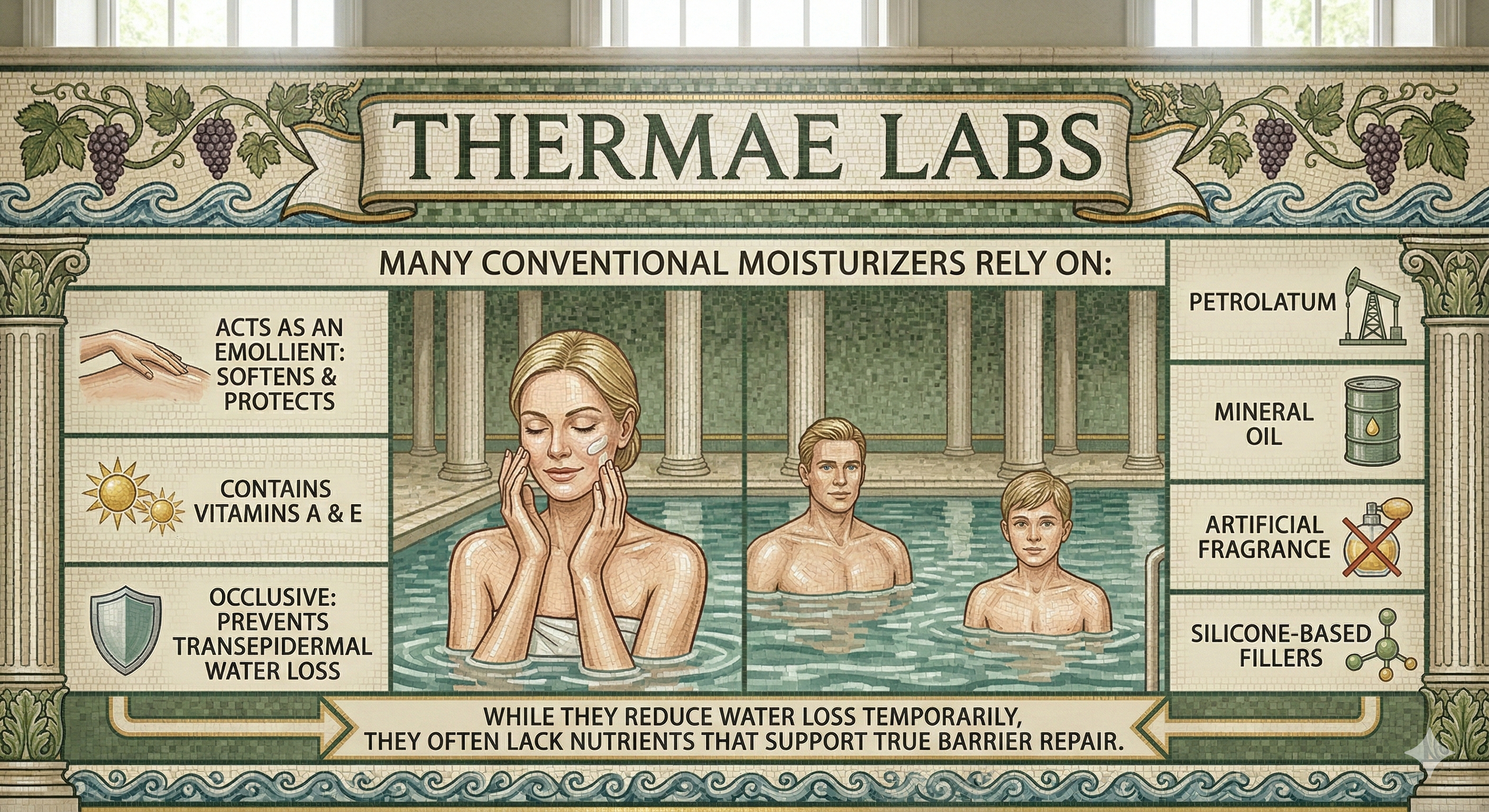
Many conventional moisturizers rely on:
Petrolatum
Mineral oil
Artificial fragrance
Silicone-based fillers
While they reduce water loss temporarily, they often lack nutrients that support true barrier repair.
Why Skin Barrier Repair Matters
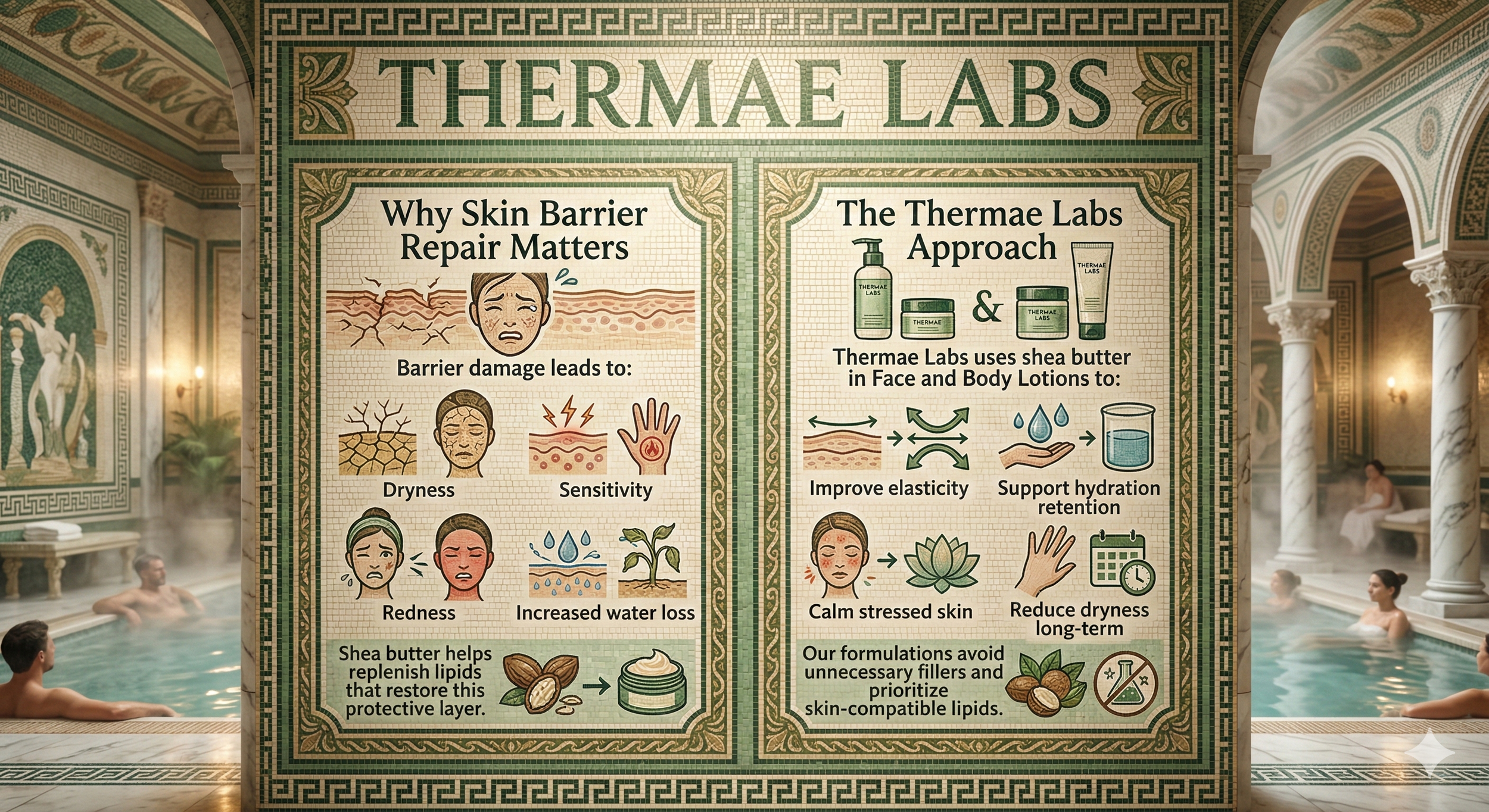
Barrier damage leads to:
Dryness
Sensitivity
Redness
Increased water loss
Shea butter helps replenish lipids that restore this protective layer.
The Thermae Labs Approach
Thermae Labs uses shea butter in Face and Body Lotions to:
Improve elasticity
Support hydration retention
Calm stressed skin
Reduce dryness long-term
Our formulations avoid unnecessary fillers and prioritize skin-compatible lipids.
Frequently Asked Questions
Is shea butter better than petroleum jelly?
Shea butter contains nutrients and fatty acids that nourish skin, while petroleum jelly primarily acts as a surface occlusive.
Can synthetic moisturizers damage the skin barrier?
Some formulas with fragrance or harsh additives can disrupt barrier balance over time.
Is shea butter safe for sensitive skin?
Yes, especially when minimally processed and fragrance-free.
Does shea butter clog pores?
When formulated properly, it is generally non-comedogenic for most skin types.